
Home Buyers Guide - Darwin NT
Looking to buy a home around Darwin, NT?
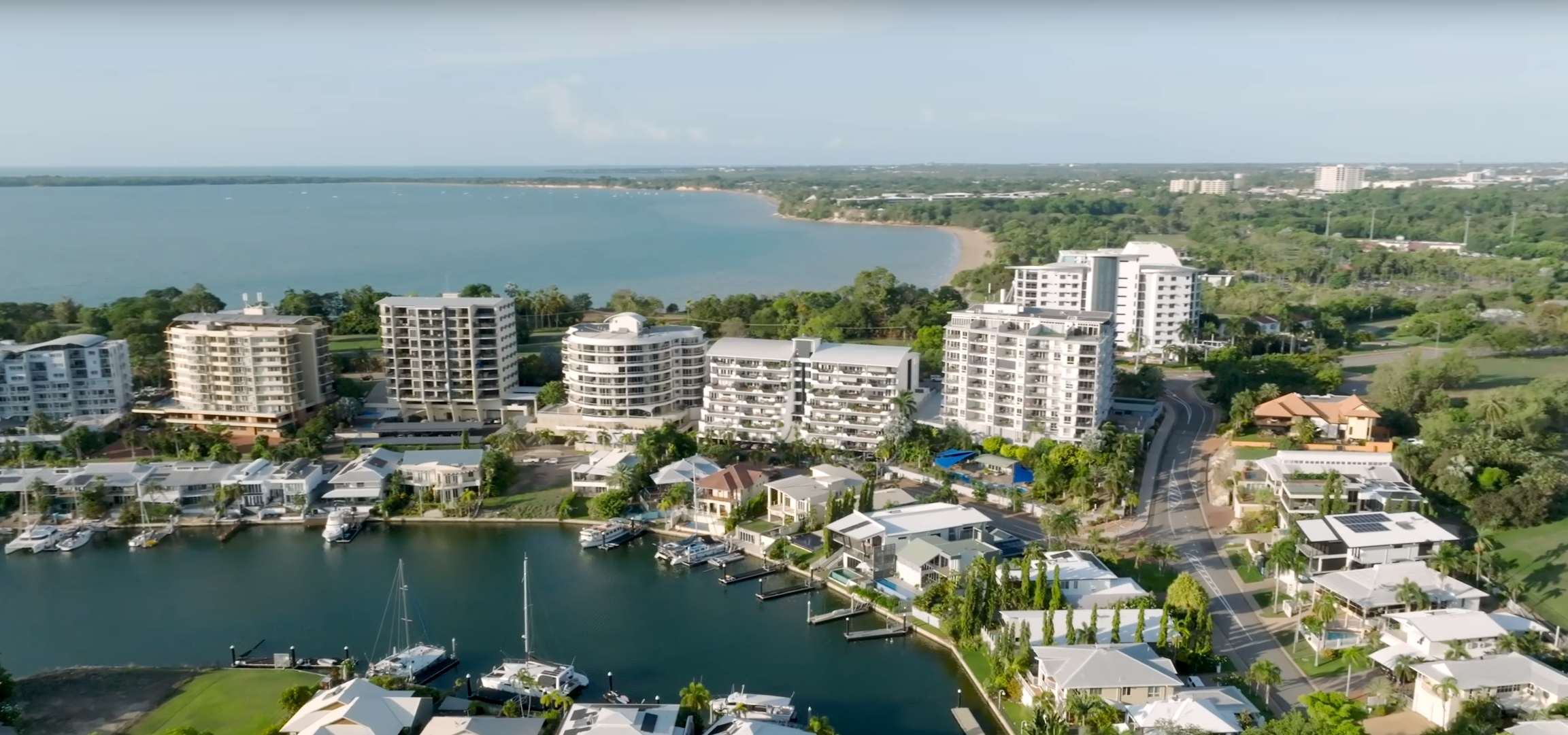
Darwin is the Northern Territory’s tropical capital on the Timor Sea, known for its waterfront lifestyle, big-sky sunsets and a dry/wet-season rhythm that shapes how the city lives (and builds). Signature drawcards include the Mindil Beach Sunset Market and the harbourside Waterfront Precinct.
Market snapshot (at a glance)
As at 9 September 2025. Figures refer to Greater Darwin unless noted.
- Houses: median sale price $562,000 (Mar qtr 2025); annual house sales 551; median days on market ~54 days (Jul 2025, modelled capital-city metric); gross rental yield ~5.9% (houses).
- Units/Apartments: median sale price $380,500 (Mar qtr 2025); annual unit sales 316;
- Momentum pointers:
- Rents & yields remain comparatively strong: Darwin had the second-highest capital-city house rent ($646/wk) in Sep qtr 2024; house yields ~5.9% year to Mar qtr 2025.
- Listings are lean: 1,001 total residential listings were on market in Aug 2025 (city-wide), keeping choice tight.
- Auctions are niche: Auction volumes are often too low to report consistently in Darwin; private-treaty sales dominate.
Amenities & community services
- Healthcare: Royal Darwin Hospital (Tiwi) is the Top End’s tertiary hospital; Palmerston Regional Hospital supports the southern corridor. Check RDH services, parking and contacts before appointments.
- Parks & green: George Brown Darwin Botanic Gardens (42 ha of tropical collections) and the Casuarina Coastal Reserve’s long beaches, paths and WWII sites.
- Everyday life: CBD/Wave Lagoon and Waterfront boardwalks; markets at Mindil Beach (Apr–Oct, Thu & Sun, 4–9 pm).
- Transport: Public buses run 7 days via Darwin, Casuarina, Palmerston & Humpty Doo interchanges; use NT’s journey planner and route timetables.
- Airport: Darwin International Airport (DRW) is the NT’s main gateway with domestic and regional connections.
Schools & catchments (verify by address)
-
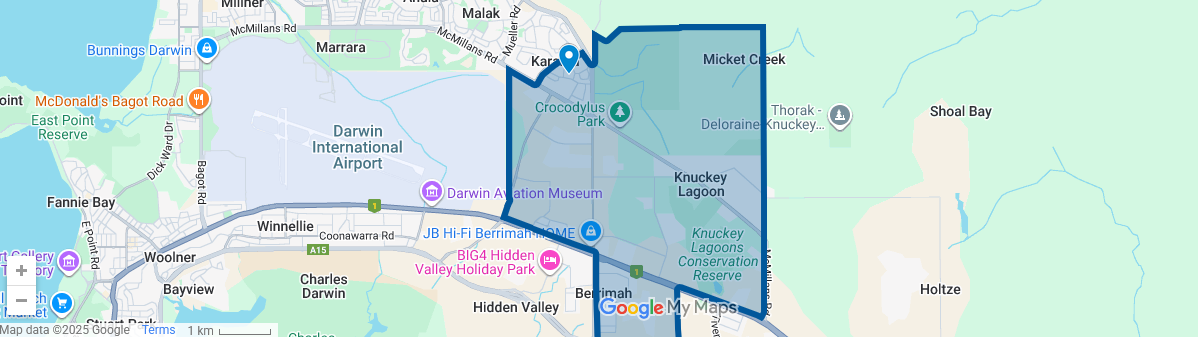
NT public schools use Priority Enrolment Areas (PEAs). Students living inside a school’s PEA have priority. Always check the latest PEA map for your year of enrolment.
-
Darwin has linked precincts across primary → middle (Y7–9) → senior (Y10–12) schooling; see NT’s “Choose a school” overview and the directory of urban schools.
-
View the Darwin Primary School zone catchment checker (Google Maps)
Demographics & dwelling mix (Darwin City - inner SA3)
- People: 27,044 residents; median age 34; avg household size 2.3; median weekly rent $420. Inner Darwin skews young-adult with a high share of apartments near the CBD/Waterfront.
- Broader region: The Darwin SA4 has 139,902 people (median age 34), illustrating a youthful workforce profile by national standards.
- Stock: Mix of tropical elevated houses (1950s–1980s, many rebuilt post-Cyclone Tracy) and contemporary apartments (2000s–2020s) around the CBD, Waterfront, Parap, Nightcliff and Stuart Park.
Planning, zoning & overlays (what can/can’t be built)
- Where to look: The NT Planning Scheme 2020 and NT Atlas mapping viewer (turn on Overlays) show zoning and constraints.
- Key overlays that often affect Darwin buyers:
- Land Subject to Storm Surge (primary/secondary zones) - stricter floor levels, materials and siting in cyclone-storm-tide areas.
- Land Subject to Flooding - especially along Rapid Creek and low-lying corridors; consult floodplain/storm-surge maps.
- Aircraft Noise (ANEF) contours near Darwin Airport/RAAF Base - may limit new sensitive uses and require acoustic design.
- Heritage/register sites - selected buildings/precincts have conservation controls; check lot-specific status via the NT Atlas “Overlays” and heritage layers.
- What it means for you:
- Raising floor levels, robust tie-downs and cyclone-rated glazing are typical in surge/flood areas.
- Close to the airport, expect acoustic reports and construction conditions if you’re renovating or building.
Older-building considerations (common Darwin fabric)
- Moisture & storm exposure: Check roof coverings, tie-downs, guttering, and wall cladding for cyclone wear and corrosion.
- Subfloor & structure: Elevated houses need sound posts, bearers/joists; look for movement/rot.
- Termites & tropical climate: Inspect for activity, drainage and ventilation issues.
- Services: Many pre-1990s switchboards, plumbing and AC systems are at end-of-life - plan upgrades.
Property Assessment
Before you sign or bid, commission an building & pest inspection tailored to Darwin’s cyclone, surge and termite conditions by an experienced inspector. A thorough report (roof, tie-downs, drainage, subfloor, moisture ingress, electrical/plumbing) protects you and is commonly required/negotiated in NT sale contracts.
Micro-pocket & street-level factors
- Premiums: Wide, quiet streets with breezes and shade; walking access to Waterfront, Botanic Gardens, CBD dining; off-street parking.
- Discounts: Within storm-surge/flood zones or backing drains/creeks; near ANEF noise contours along flight paths; high-activity late-night strips without parking.
- Edges: Be mindful of school zone boundaries and body-corporate condition in older unit blocks.
Your offer strategy
- Use like-for-like comparables from the past 3–6 months in the same micro-area (house vs townhouse vs unit), adjusting for renovation/maintenance.
- Auctions: Darwin has very low auction volumes most weeks; many properties sell private treaty. If you do face an auction, consider an independent valuation and strict walk-away limit.
Links & how to verify
- Market & prices (capital-city/Darwin): NT Economy (REINT/REIA sourced quarterly medians & rents).
- Listings & vacancy: SQM Research - monthly press releases and city dashboards.
- Planning scheme & overlays: NT Planning Scheme + NT Atlas viewer.
- Storm surge & flood maps: NT Government storm-surge and floodplain resources; Rapid Creek studies.
- Airport noise: 2043 ANEF (PDF) (RAAF Base Darwin & Darwin International Airport).
- Schools: Priority Enrolment Area (catchment) checker.
- Public transport: Journey planner & Darwin/Palmerston timetables.
- Healthcare: Royal Darwin Hospital.
- Comparable sales (retail portal): Recent “Sold” results for Darwin suburbs (e.g., Parap, Nightcliff, Stuart Park) via major portals (REA/Domain).
This guide is practical, not legal/financial advice and may contain mistakes. Always check the official sources and engage qualified professionals for inspections, planning and valuation.


